
The complete guide
Choosing a grow light for a small indoor setup
Lighting a small hydroponic setup is mostly a question of area. Work out the footprint you need to cover, then pick the fitting that covers it, rather than picking a wattage and hoping.
One lamp, or a run of strips
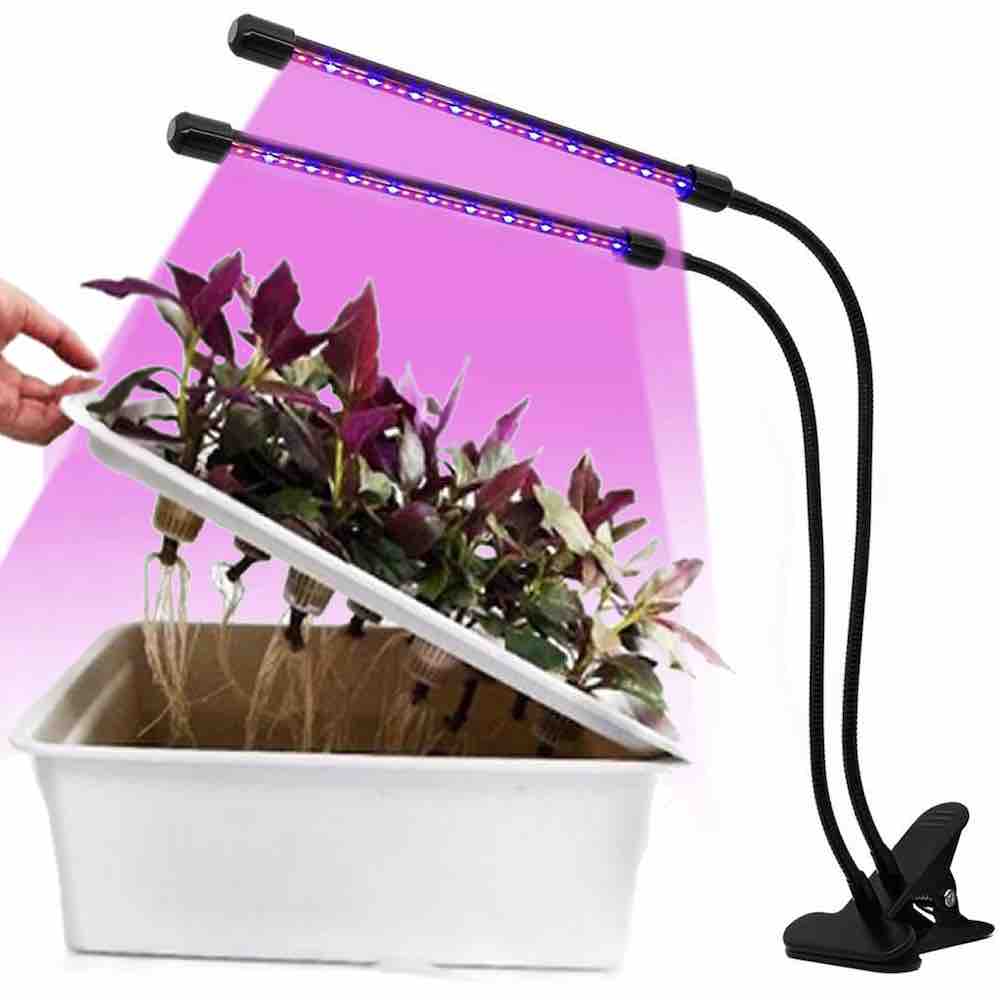
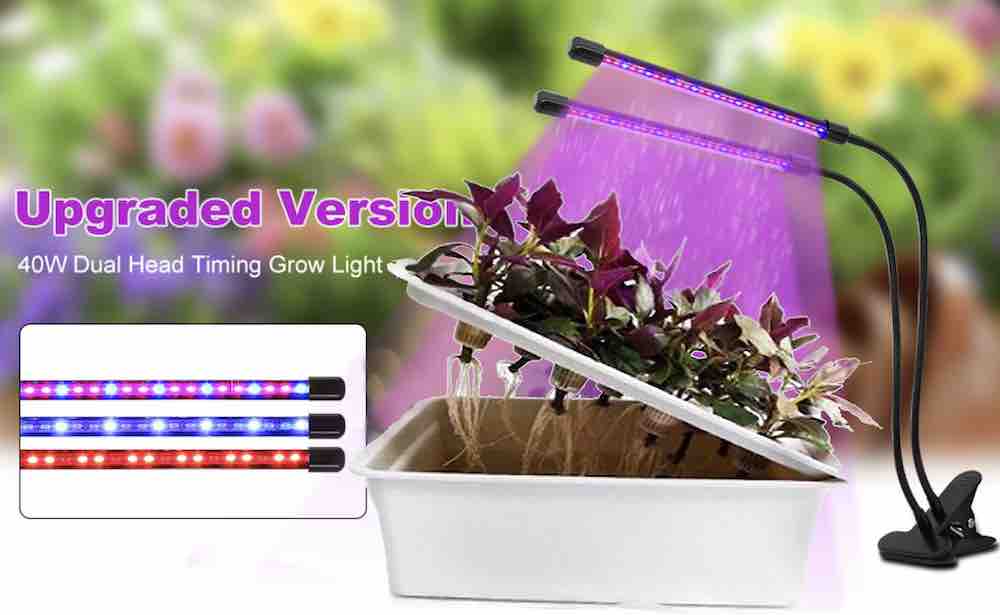
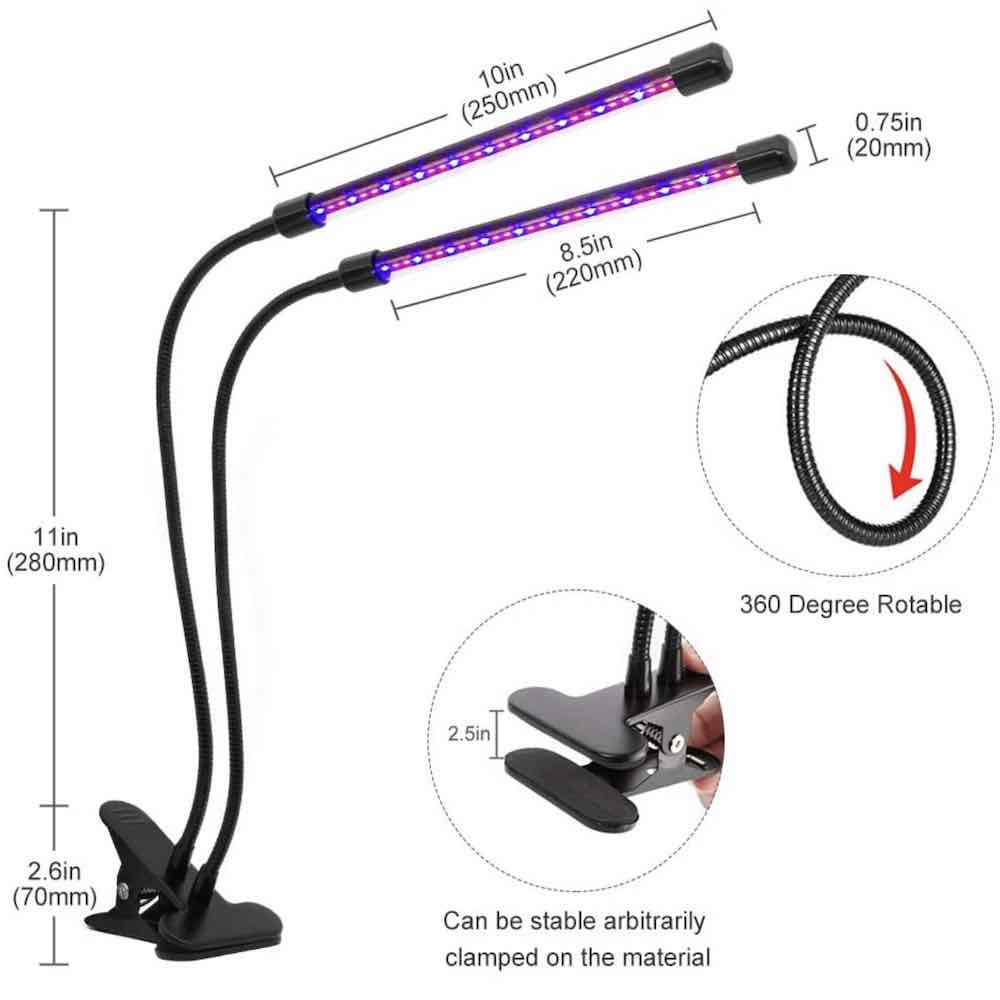
A two head clip lamp lights a spot. That is the right answer for a single 11 cup tub, a propagator tray of seedlings, or a couple of pots on a kitchen shelf. Two arms mean you can put light at both ends of a tray instead of one bright patch in the middle.
A row of plants is a different problem. A 36 cup kit, a 108 cup system or a shelf running the length of a wall wants a line of light, which is what the linked 90 cm strips are for. Trying to stretch one clip lamp across a system is the most common way people end up with pale, stretched growth and conclude that hydroponics does not work.
Height, and reading the plants
Start about 30 cm above the top of the canopy. After that the plants will tell you more than any chart. Pale, leggy growth reaching towards the lamp means not enough light: lower it or turn it up. Leaves that look bleached, or that curl away from the light, mean the opposite.
Move it in small steps and give it a few days between changes. Plants respond over days, not hours, and it is easy to chase the problem past the point where it was solved.
Day length matters more than intensity
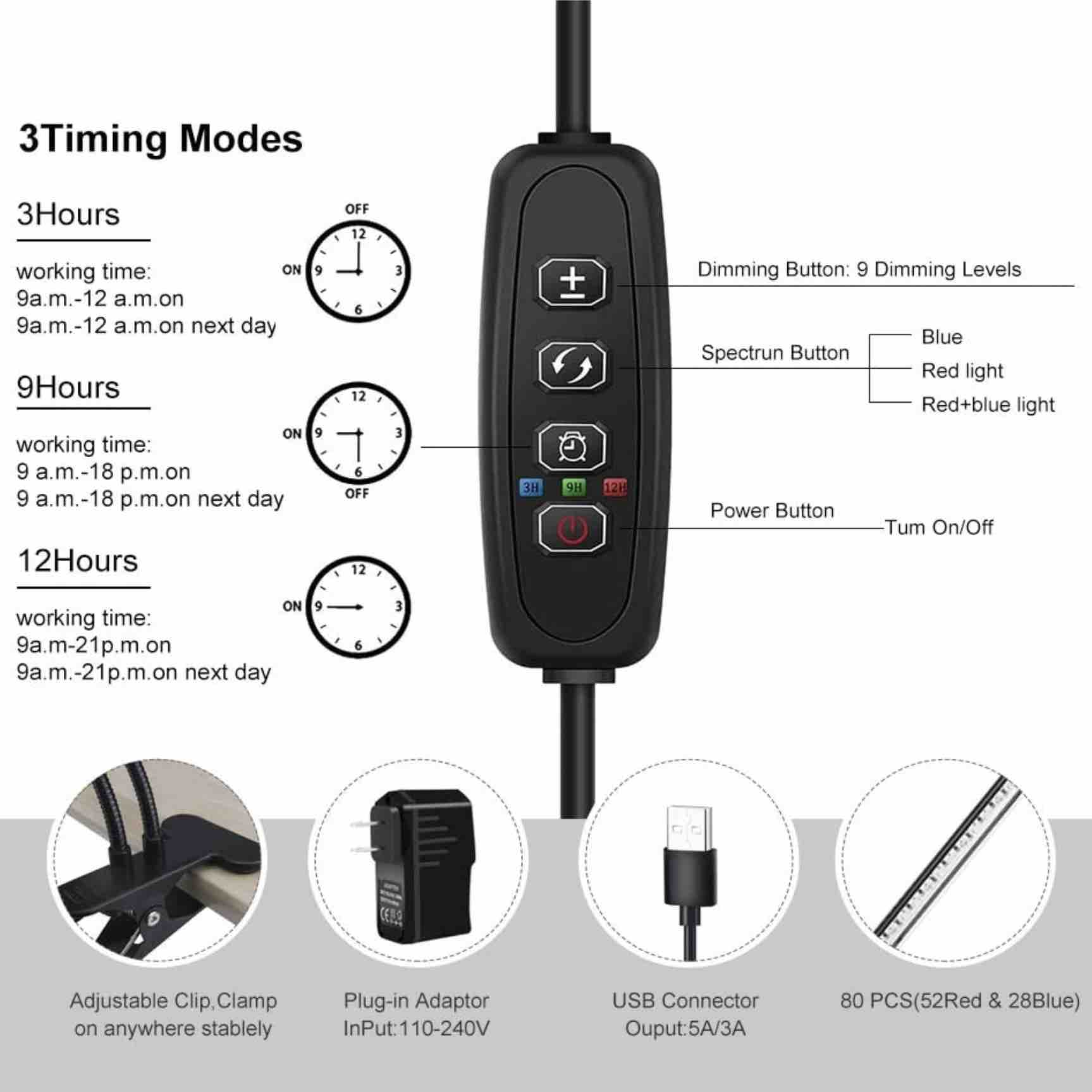
A consistent photoperiod does more for seedlings than a brighter lamp. Something in the range of 12 to 16 hours suits most leafy crops, and the important part is that it is the same every day. That is the whole reason the timer is built into the cable rather than sold separately: a lamp you have to remember to switch on is a lamp that gets forgotten on the days it matters.
Most plants also need a dark period. Running a light continuously is not a shortcut.
Colour modes, honestly
Blue light is generally associated with compact leafy growth and red with flowering and fruiting, which is why this lamp offers red, blue, or both. If you are growing herbs and salad and you would rather not think about it, run both and use the brightness steps instead. The colour switch earns its keep if you are deliberately pushing a plant through a stage.
Running cost
At 40 W, twelve hours a day comes to roughly 14 kWh a month. What that is worth in money depends entirely on your own electricity rate, so the useful number is on your bill rather than on this page.
What it will not do
It is not waterproof, so keep it clear of the reservoir when you are topping up. The LEDs are built in and are not replaceable, which is why the 50,000 hour rating is the number to look at. And the power cord is genuinely short at about 20 cm, so check there is a socket where you plan to clip it before the box arrives.